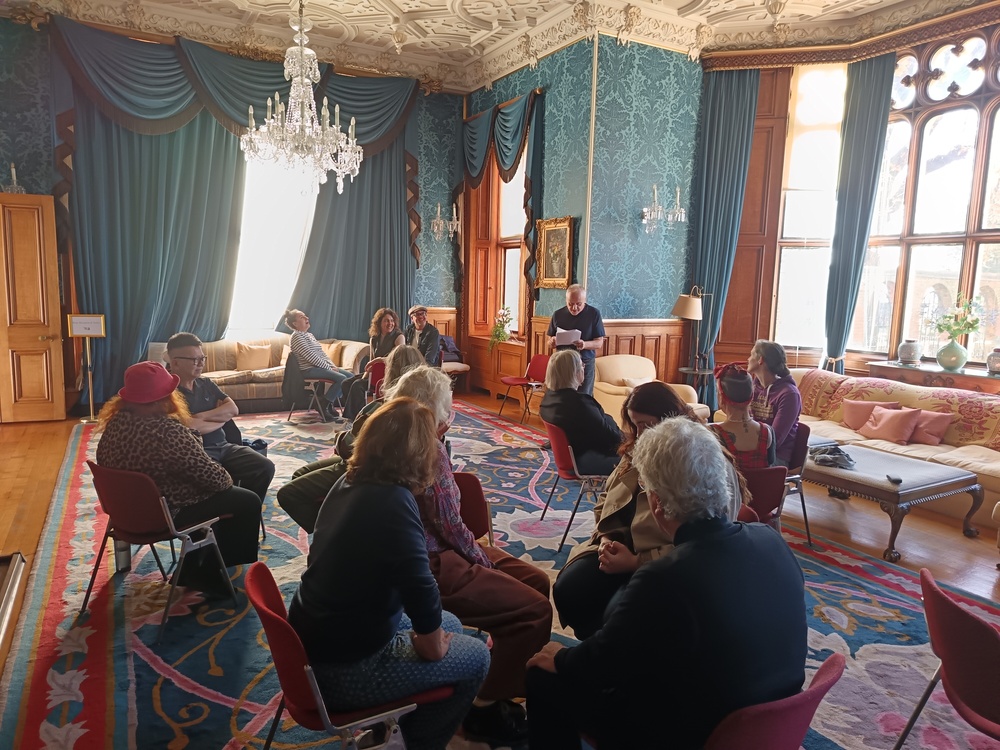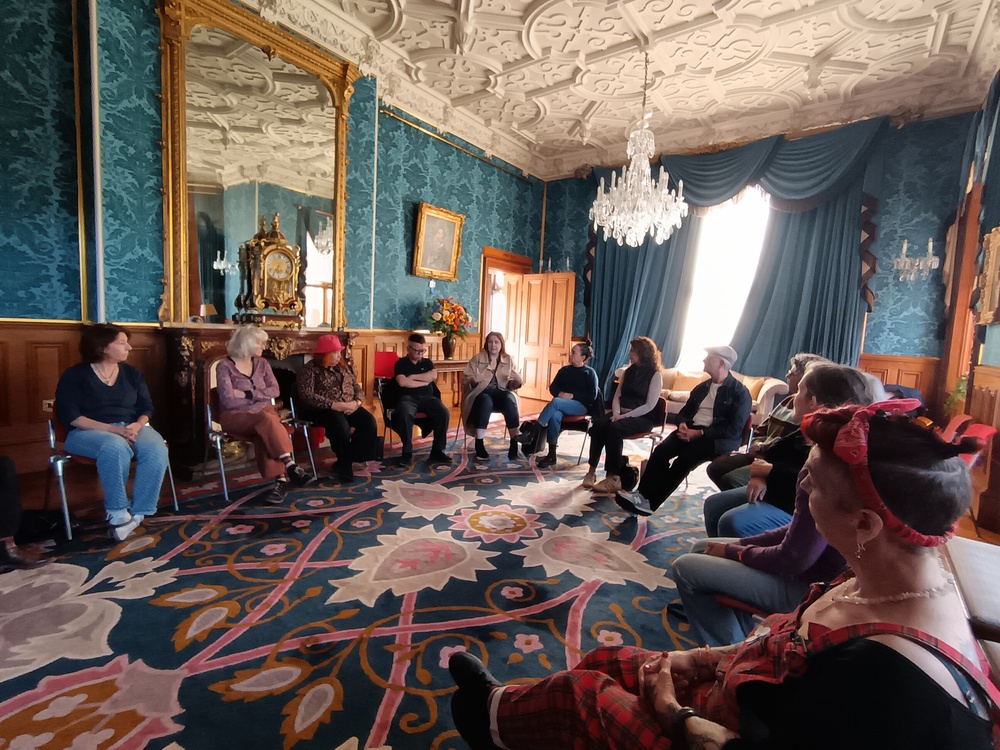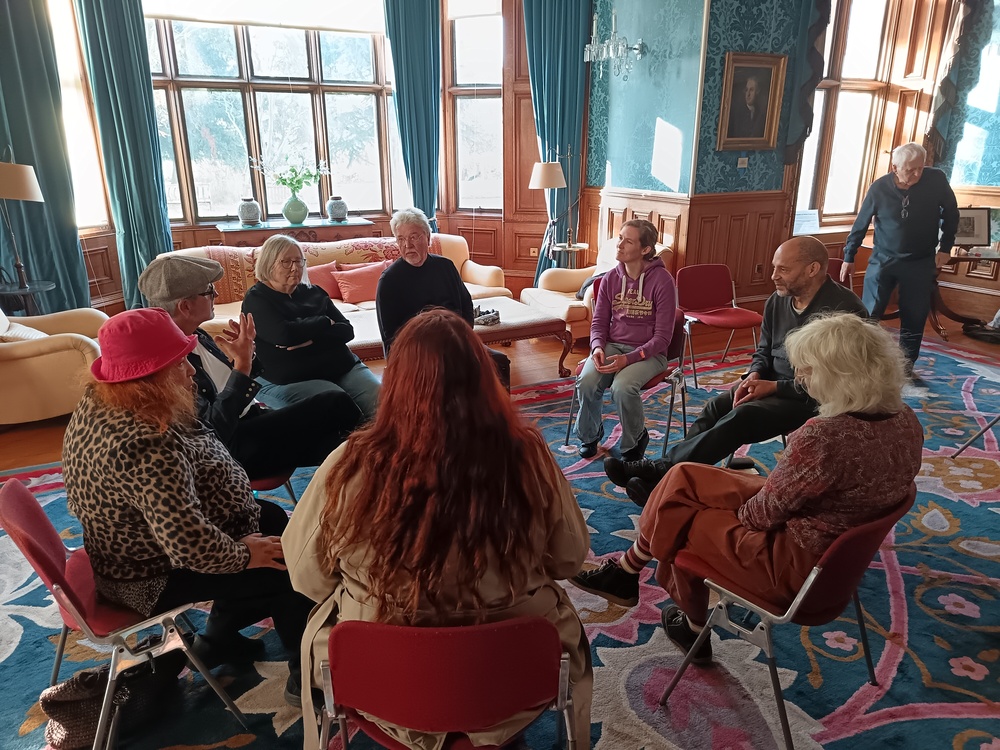
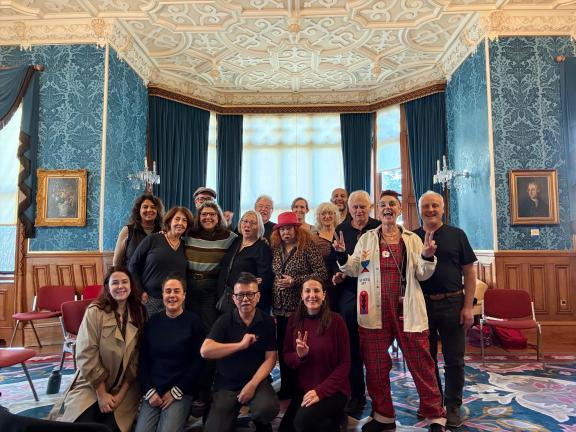
Around twenty participants gathered from various parts of the United Kingdom at the Taplow Court Cultural Centre on Saturday 31 October to take part in a day organised by the Centre for Applied Buddhism for a workshop around the power of dialogue. In a world that often feels increasingly polarised, dialogue offers a powerful way to think together, learn from one another and discover new possibilities. Jamie Cresswell, director of the Centre for Applied Buddhism, led the workshop, alternating between small group exercises and collective feedback. Various practices of dialogue have been explored, one of which referring to four disciplines drawn from the book 'Dialogue: The Art of Thinking Together’ by William Isaacs (founder of the MIT Dialogue Project).
The first exercise was based on the practice of Listening, that is, listening to others while simultaneously observing how one's own mind reacts and judges. On this point, participants shared how difficult it is to truly listen without, for instance, thinking about what we want to say next, noting that a real battle takes place inside our minds. Someone commented: "I felt welcomed in a safe environment and shared a story that I had never been able to share before", another said: "Listening to my heart, I realised that I am constantly afraid of not being understood or of not being able to express myself".
The second was the practice of Respecting: Recognising the value and legitimacy of another person's perspective, even if it differs from one's own. Jamie reminded everyone how one of the fundamental messages of the Buddhist philosopher Dr. Daisaku Ikeda was precisely that dialogue always begins with respect for the other person. In this second exercise, someone asked whether it is truly possible to respect another person's thought even when, to us, it does not seem to align with our point of view. During this exercise, it was noted how much of the other person we sometimes miss out on, and how important it is, instead, to seek to understand each other deeply.
The third exercise was the practice of Suspending, that is, "parking" one's own certainties and emotional reactions to examine them from a distance. Our habit of reacting is highly present when we engage in dialogue; one participant commented: "For me, it is sometimes really difficult not to take what is said to me personally, and my opinions block me". Another said they had determined "To want to develop their ability to express themselves so that others can understand them".
The final practice was Voicing, that is, expressing one's own truth with authenticity, overcoming fears and self-censorship. This practice of dialogue created a generative dialogue, meaning a dialogue capable of creating and developing something fresh and new.
This day was an opportunity to experience, within a safe environment, how powerful dialogue can be when we have the right tools. The participants returned home with a curiosity to put what they had learned into practice.